



Investing in the Leaders Who Power Vermont’s Child Care System
Early childhood educators aren’t just caring for children. They’re building small businesses, leading teams, and creating essential community infrastructure.
First Children’s Finance Vermont partners with child care business owners to strengthen the foundations that make high-quality care possible. By investing in leadership development, FCF equips directors with practical tools to improve sustainability, expand capacity, and lead programs that fuel local economies.
 With increased public funding through Act 76, directors face new opportunities and greater responsibility. FCF develops resources in response to what directors and owners need; these tools address some of the biggest challenges programs face, including hiring and retaining staff. These resources help leaders make daily and long-term decisions: staffing classrooms, guiding teams, planning growth, and sustaining quality over time. They give directors the structure and connections needed to turn public funding into tangible results for staff, families, and children.
Developing Strong Supervisors
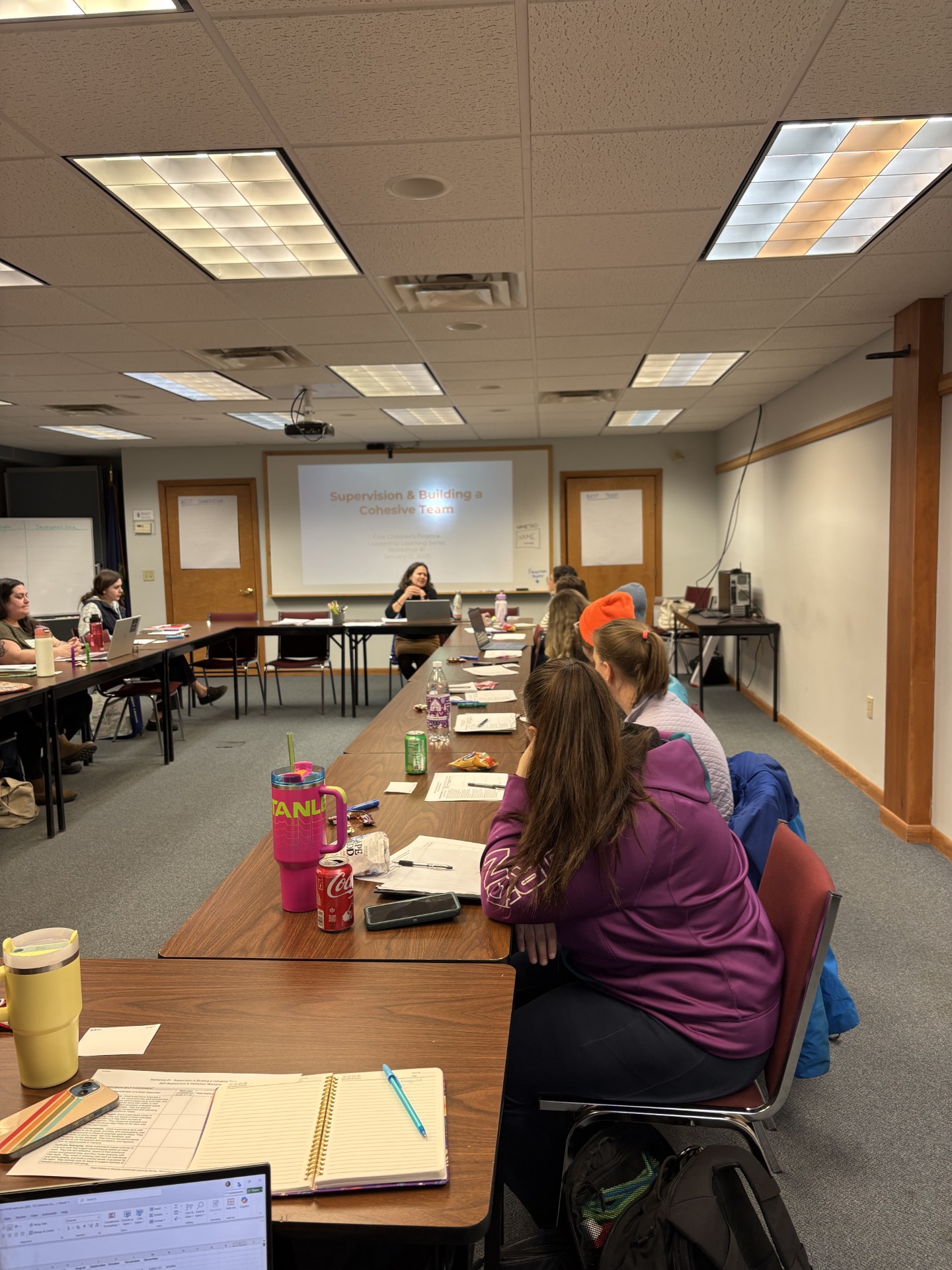
The 2026 Leadership Learning Series brings together 18 directors and program leaders in a five-month cohort, January through May. Designed for leaders who otherwise must learn supervision on the job, the series creates space to build skills alongside peers facing similar challenges. Each session focuses on a practical leadership challenge, including building cohesive teams, setting priorities, navigating difficult conversations, recognizing staff contributions, and developing a leadership voice that endures.
“Many child care leaders step into supervision without formal training, even though the role requires clarity and steady decision-making,” said Erika Schramm of Skylight Coaching and Consulting, who teaches the series. “Leadership isn’t always a straight path, but with vision, clear goals, and a commitment to learning, directors can grow into their role. This series offers practical tools and the chance to practice and learn alongside peers who truly understand the work.”
Rather than treating leadership as a theory exercise, the series emphasizes practice. Participants test new approaches in their programs between sessions—onboarding staff more intentionally, clarifying roles, and experimenting with team structures—and return to the group to reflect on what worked and what didn’t. Over time, the cohort becomes a trusted peer network, offering perspective, accountability, and reassurance in a role that can often feel isolating.
Hiring with Intention
Hiring and retaining staff remains one of the most complex challenges facing child care programs. The Hiring Done Well (and Lawfully) series addresses this challenge through three interactive workshops led by employment attorney Kris Brines and HR consultant Beth Gilpin.
With strong participation from directors across the state, the series reflects a shared need for clearer, more thoughtful hiring practices. Workshops walk leaders through the full hiring process, from defining what “hiring well” means to building strong job descriptions, interviewing and vetting candidates, and setting new staff up for success. Along the way, participants are encouraged to examine how their hiring practices reflect their program’s values and culture.
 “The series provided a powerful platform to sharpen my professional skills while connecting with peers in the field,” said Crystal Bennett of Magic Mountain Children’s Center. “Engaging with other leaders helped me refine my recruitment strategies and build a more robust toolkit for identifying top talent. Networking with such a talented group not only expanded my perspective but also gave me the practical expertise to communicate our values more effectively and foster growth within my team.”
Strengthening Legal and Financial Foundations
The Child Care Business Administration (CCBA) course equips directors with essential legal and operational skills through a three-credit course offered through Vermont State University.
Participants apply what they learn directly to their own programs: developing business plans, assessing finances, and planning for growth. Many leaders enter the course without formal training in program administration, but quickly see how these skills support better staffing decisions, wage planning, and long-term stability. Using real program data and daily realities, the course helps ensure that Act 76 investments lead to stable, high-quality child care programs.
Jen Olson of Quarry Hill School said, “It’s such a gift to have dedicated time and space to learn and practice the specific skills needed to run a child care program from the business side. As a new director, coming together with other educators and experienced faculty has strengthened my leadership, our program, and our broader early childhood education community.”
Leadership Investment that Lasts
Together, these initiatives help directors understand their role as leaders of teams, stewards of public investment, and builders of sustainable programs. When every business decision is seen as connected parts of the same work, leaders are better positioned to support staff and plan for growth.
As Vermont continues to invest in child care, these leadership supports help ensure that funding leads to lasting change: stronger teams, more stable programs, and care that families can rely on.


